How to Use Metaphors and Similes to Elevate Your Prose invites writers to explore the vibrant world of figurative language, which can transform ordinary narratives into extraordinary experiences. By delving into the nuances of metaphors and similes, this guide not only clarifies their definitions but also illustrates the profound impact they can have on imagery and emotional storytelling. As we journey through the historical significance and applications of these literary devices, writers will discover techniques to craft original expressions that resonate deeply with readers.
This exploration will encompass practical exercises, analyses of famous literary examples, and insights into the cultural dimensions of metaphors and similes, all of which aim to enhance one’s prose with creativity and clarity.
Understanding Metaphors and Similes
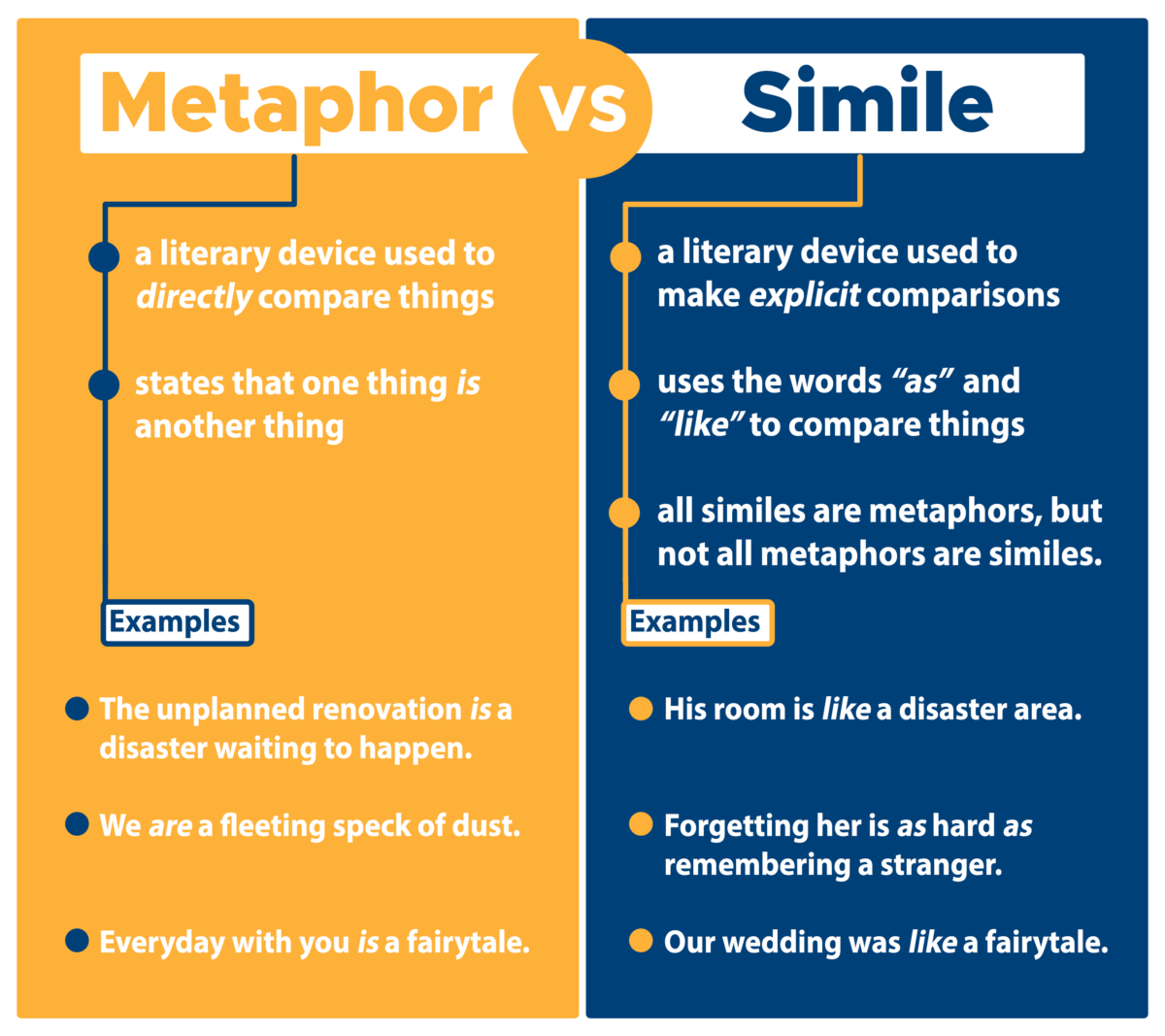
Metaphors and similes are powerful literary devices commonly employed in prose to convey complex ideas, emotions, and imagery through comparison. Both techniques serve to enhance the reader’s understanding and engagement with the text by creating vivid mental images. In this section, we will explore their definitions, differences, and historical significance in literature.Metaphors and similes are both means of comparison that enhance writing by linking an unfamiliar concept to a familiar one, yet they do so in distinct ways.
A metaphor asserts that one thing is another, creating a direct equivalence. For example, saying “Time is a thief” suggests that time stealthily steals moments from our lives. In contrast, a simile uses “like” or “as” to draw a comparison, such as, “Her smile was like sunshine,” which implies brightness and warmth without asserting that her smile is sunshine itself.
Differences Between Metaphors and Similes
Understanding the differences between metaphors and similes is crucial for effective literary expression. Both devices create comparisons, but they do so with different structures and implications. Here are the key distinctions:
- Structure: Metaphors do not use “like” or “as,” while similes do. This structural difference is fundamental in identifying each device.
- Directness: Metaphors provide a more direct connection by stating that one thing is another, whereas similes illustrate parallels without equating the items directly.
- Imagery: Metaphors tend to evoke a stronger emotional response due to their assertive nature, while similes often create clearer, more relatable imagery.
- Complexity: Metaphors can convey layered meanings and may require deeper interpretation, while similes are generally simpler and more straightforward.
Historical Context and Significance
The use of metaphors and similes can be traced back to ancient texts, where they served as essential tools for storytelling and rhetoric. In works like Homer’s “Iliad” and “Odyssey,” similes were employed extensively to enhance the epic narrative, painting vivid imagery that brought the characters and events to life. Similarly, metaphors have been a staple in poetry and prose throughout history, providing depth and resonance to language.The significance of these literary devices extends beyond mere embellishment.
They foster connection between the writer and reader, inviting readers to explore deeper meanings and interpretations within the text. As observed in Shakespeare’s plays, such as the metaphorical expression “All the world’s a stage,” these devices enrich the narrative, allowing audiences to engage with themes on multiple levels. In modern literature, the continued use of metaphors and similes reflects their enduring relevance.
Contemporary authors harness these devices to convey complex emotions and abstract concepts, ensuring that their prose resonates with readers in meaningful ways. The impact of metaphors and similes remains profound, serving as essential components of effective writing across genres and eras.
The Role of Metaphors and Similes in Prose
Metaphors and similes are powerful literary devices that significantly enhance prose by enriching the imagery and emotional depth of the writing. These figures of speech allow writers to draw vivid comparisons, making abstract concepts more tangible and relatable for readers. In addition to painting a clearer picture, metaphors and similes help to evoke emotions, creating a more immersive reading experience.The integration of metaphors and similes serves to elevate the overall quality of prose through the enhancement of imagery and emotional resonance.
When employed effectively, these devices can transform ordinary descriptions into striking visuals that linger in the reader’s mind. Consider a simile that compares a character’s determination to a rock in a river, demonstrating not only strength but also resilience against external pressures. This vivid imagery allows readers to visualize the character’s qualities and circumstances more vividly and personally.
Enhancement of Imagery in Writing
Metaphors and similes play a crucial role in enhancing imagery within writing. By drawing comparisons between seemingly unrelated subjects, these devices allow writers to create a more vivid and descriptive narrative. The use of metaphors and similes can illuminate key aspects of characters, settings, or events, providing readers with deeper insights. For instance, when an author writes, “Her smile was like sunshine breaking through the clouds,” it evokes a warm, uplifting image.
This not only illustrates the character’s personality but also conveys a feeling of hope and joy. The emotional responses elicited by such comparisons enhance the reader’s engagement with the text, making the narrative more memorable.
Emotional Impact in Storytelling
The emotional impact of metaphors and similes in storytelling cannot be overstated. These devices allow writers to communicate complex feelings and moods in a concise and compelling manner. By encapsulating emotions within vivid imagery, authors can resonate with readers on a deeper level. In moments of tension, a metaphor such as “the darkness enveloped him like a suffocating blanket” can convey a sense of despair and hopelessness.
Such descriptions evoke empathy, allowing readers to relate to the character’s plight. This emotional connection is essential for effective storytelling, as it fosters a bond between the reader and the characters.
Genres for Effective Use of Metaphors and Similes
Certain genres particularly benefit from the use of metaphors and similes due to their inherent focus on imagery and emotional depth. The following genres exemplify the effectiveness of these devices:
- Poetry: Often relies on metaphors and similes to convey emotions and imagery in a condensed form, making them essential for creating lyrical and evocative language.
- Fiction: In narrative fiction, metaphors and similes enrich character development and setting descriptions, allowing readers to visualize the story world more vividly.
- Fantasy: This genre thrives on imaginative comparisons that create immersive worlds, where similes and metaphors can bring magical elements to life.
- Romance: Emotional connections in romance narratives are often amplified through metaphors and similes that describe feelings of love and longing, enhancing reader empathy.
These genres illustrate how metaphors and similes can be leveraged to elevate prose, ultimately enriching the reader’s experience and deepening their emotional engagement with the narrative.
Techniques for Creating Effective Metaphors and Similes

Crafting effective metaphors and similes can significantly enhance your prose, allowing readers to visualize concepts and emotions in a more vivid way. By employing creative comparisons, writers can create deeper connections between their ideas and the audience’s experiences. This section will provide techniques for brainstorming original metaphors and similes, along with a step-by-step guide for integrating them seamlessly into your writing.
Brainstorming Original Metaphors and Similes
Generating original metaphors and similes involves tapping into your imagination and observing the world around you. Here are some effective methods to foster creativity:
- Free Writing: Dedicate a set time to write without constraints. Allow your thoughts to flow and jot down any comparisons that come to mind. This can help uncover unique associations.
- Mind Mapping: Begin with a central theme or emotion in the middle of a page and branch out with related words and images. This visual representation can inspire new metaphorical connections.
- Sense Exploration: Engage your senses by describing an experience. For each sense, generate similes or metaphors that relate to your main theme, enhancing the sensory experience of your writing.
- Use of Analogies: Consider how your theme relates to different concepts. For instance, if writing about love, think of its similarities to a journey, a fire, or even a song, and expand from there.
Incorporating Metaphors and Similes into Existing Prose
To weave metaphors and similes into your writing, follow these steps for a structured approach:
- Identify Key Themes: Determine the central themes or emotions in your prose that could benefit from deeper imagery.
- Analyze Existing Comparisons: Review your current text for areas where comparisons could enhance clarity or impact. Look for descriptions that feel flat or could be more evocative.
- Draft New Comparisons: Based on your brainstorming methods, create new metaphors or similes that resonate with the identified themes. Ensure they are relevant and enhance the narrative.
- Integrate Smoothly: Introduce your new metaphors or similes in a way that feels natural within the flow of the prose. Avoid jarring transitions; they should enhance rather than distract.
- Revise for Clarity: After incorporation, revisit your text to refine the metaphors and similes for clarity and impact. Ensure they align with the tone and style of your writing.
Examples of Common Metaphors and Similes with Alternatives
Utilizing familiar metaphors and similes can serve as a foundation for creativity. Below are common expressions alongside suggested alternatives:
“Time is a thief.”
Consider expressing the idea differently, such as “Time flows like a river, sweeping away moments.”
“He has a heart of stone.”
An alternative could be “His heart is a fortress, impenetrable and cold.”
“Life is a journey.”
You might reframe it as “Life unfolds like a winding road, filled with unexpected turns.”By employing these techniques, writers can not only enhance their prose but also engage readers on a more profound level, drawing them into the imagery and emotions conveyed through creative language.
Analyzing Famous Uses of Metaphors and Similes

The application of metaphors and similes in literature is not merely decorative; these devices serve as powerful tools that enhance the depth and emotional resonance of a text. Many renowned literary works are celebrated for their effective use of these figurative language techniques, illustrating the authors’ unique styles and cultural influences. Understanding these applications can provide insight into the artistic choices made by writers and the enduring impact of their language on readers and society.Literature is replete with examples of masterful metaphors and similes, which not only elevate the prose but also contribute to the thematic richness of the works.
The following notable literary works stand out for their exemplary use of these devices:
Notable Literary Works and Their Use of Figurative Language
The exploration of famous literary works reveals a spectrum of creativity in the use of metaphors and similes. Each author brings a distinctive voice and perspective, utilizing these devices to convey complex ideas and emotions. The following works exemplify this diversity:
- “The Great Gatsby” by F. Scott Fitzgerald: Fitzgerald’s use of simile is evident in his portrayal of Jay Gatsby’s extravagant lifestyle, comparing it to a “distant star,” which encapsulates the unattainable nature of Gatsby’s dreams.
- “The Road Not Taken” by Robert Frost: Frost employs metaphor throughout the poem, with the fork in the road serving as a powerful symbol for choices and their irrevocable consequences, compelling readers to reflect on their own life decisions.
- “To Kill a Mockingbird” by Harper Lee: Lee’s narrative is punctuated with poignant similes, such as describing Boo Radley as “like a ghost,” highlighting the themes of fear and misunderstanding surrounding the character.
- “Moby-Dick” by Herman Melville: Melville’s extensive use of metaphor can be seen in Captain Ahab’s obsession with the whale, which serves as a representation of humanity’s struggle against nature and fate.
The stylistic choices of various authors in utilizing metaphors and similes reflect their literary intentions and cultural contexts. For instance, the Romantic poets often employed nature-related imagery to express transcendental themes, while modernist writers, like T.S. Eliot, used fragmented metaphors to evoke the disillusionment of the post-war era.
Cultural Impact of Metaphors and Similes in Literature
Metaphors and similes do not merely enhance individual works of literature; they also resonate within the cultural consciousness, influencing language and thought. Certain phrases have transcended their original contexts to become part of everyday vernacular, demonstrating their profound societal impact. For example, Shakespeare’s phrase “all the world’s a stage” from “As You Like It” has entered common use, effectively shaping perceptions of life’s performative aspects.
Similarly, the metaphor of the “American Dream,” which is prevalent in various literary texts, serves as a cultural touchstone that continues to inspire and critique societal aspirations.
“The metaphor is a powerful tool in literature, allowing writers to forge connections between disparate ideas and evoke emotional responses that resonate deeply with readers.”
Through these examples, it is evident that metaphors and similes are integral to the fabric of literature. They not only enrich the narrative but also foster a shared cultural language that speaks to the human experience.
Practical Exercises for Writers
Writers looking to enhance their prose can benefit significantly from exercises focused on the use of metaphors and similes. These literary devices not only enrich the text but also engage readers by creating vivid imagery and connections. By incorporating structured activities into your writing routine, you can develop a deeper understanding and mastery of these techniques.Engaging in practical exercises allows writers to practice and refine their skills in crafting effective metaphors and similes.
This section Artikels several activities designed to spark creativity and encourage exploration of language through these figures of speech.
Writing Exercises for Metaphors and Similes
The following activities are designed to stimulate your imagination and push the boundaries of your writing. Each exercise encourages the use of metaphors and similes in unique ways.
- Imagery Brainstorming: Choose a common object, such as a “tree” or “ocean,” and create a list of ten metaphors or similes that describe it. For example, “The tree was a sentinel, watching over the garden.” This exercise helps in associating vivid imagery with everyday subjects.
- Metaphor Mapping: Select a theme, such as “loneliness” or “joy,” and draw a mind map. Connect the theme to various related metaphors and similes. For instance, “Loneliness is a vast ocean where one is adrift.” This visual representation can enhance your ability to generate creative comparisons.
- Sentence Transformation Challenge: Take a paragraph from your writing that lacks figurative language and rewrite it using at least three metaphors or similes. This exercise emphasizes the transformative power of imagery in prose.
Group Activities for Collaborative Learning
Collaboration with peers can provide valuable feedback, enriching the writing process. The following group activities foster an environment for sharing and critiquing metaphor and simile usage in drafts.
- Metaphor Exchange: Have each participant write a short paragraph incorporating metaphors and similes. Exchange paragraphs among the group, and allow each member to provide feedback specifically focusing on the effectiveness of the figurative language used. This activity cultivates a sense of community while enhancing critical analysis skills.
- Critique Circles: Form small groups and take turns reading excerpts from your works that utilize metaphors and similes. Encourage constructive criticism and suggestions for improvement. This collaborative effort will illuminate potential areas for enhancement and inspire new ideas.
- Themed Writing Prompts: Organize writing sessions based on specific themes, such as “nature” or “emotions.” Each writer composes a piece that incorporates metaphors and similes relevant to the theme. After sharing, discuss the various approaches taken and analyze the effectiveness of the language choices. This not only develops individual skills but also broadens perspectives on metaphorical expression.
“Metaphors and similes are the paintbrushes of the writer’s canvas, allowing one to create vivid landscapes with mere words.”
Common Mistakes to Avoid
When incorporating metaphors and similes into prose, writers often encounter pitfalls that undermine their effectiveness. Recognizing these common mistakes is crucial for enhancing clarity and engagement in writing. The objective is to enrich the reader’s experience, not to confuse or alienate them. One of the most significant errors writers make is the use of convoluted metaphors that may obscure meaning rather than illuminate it.
Clarity should always take precedence, as overly complex or abstract comparisons can confuse readers and distract from the narrative. A strong metaphor or simile should enhance understanding and evoke vivid imagery, not complicate the message being conveyed.
Frequent Pitfalls in Metaphor and Simile Usage
It is essential to be aware of frequent mistakes that can diminish the impact of metaphors and similes. The following points highlight these pitfalls and emphasize the importance of clear and fresh comparisons:
- Overly Complicated Comparisons: Metaphors that are too intricate can leave readers puzzled. For instance, saying “Her thoughts were like a labyrinth filled with minotaurs” may confuse rather than clarify. Simpler analogies tend to resonate better.
- Lack of Relevance: When metaphors do not relate to the context or theme, they can feel forced. An example could be using a nautical metaphor in a story set in the desert, which may distract rather than enhance the narrative.
- Clichéd Expressions: Relying on worn-out phrases such as “time is money” or “the world is your oyster” can make writing feel stale. Refreshing these metaphors is vital. For instance, instead of saying “the world is your oyster,” one might say “the world is a vast tapestry waiting for your unique thread,” offering a more original perspective.
- Neglecting Tone: Mismatched metaphors can disrupt the overall tone of a piece. A light-hearted simile in a serious narrative can create dissonance. It’s crucial to ensure that the language aligns with the mood of the writing.
- Excessive Use: Overloading prose with metaphors and similes can overwhelm readers. It’s important to strike a balance to maintain clarity and flow. A few well-placed comparisons can be far more impactful than an abundance of them.
“Metaphors and similes should serve as bridges to understanding, not barriers to clarity.”
The importance of avoiding these common mistakes cannot be overstated. A focused approach to crafting metaphors and similes ensures that they enhance the reader’s experience, providing vivid imagery and deeper understanding without causing confusion.
Integrating Metaphors and Similes with Other Literary Devices
The use of metaphors and similes can significantly enhance prose by creating vivid imagery and connecting with readers on a deeper emotional level. When effectively combined with other literary devices, such as personification and alliteration, the overall impact of the writing can be magnified, resulting in a more engaging and memorable reading experience. This section delves into how these devices can work synergistically to elevate the quality of prose.Metaphors and similes can complement other literary devices by enriching descriptions and enhancing the emotional resonance of a narrative.
For instance, personification can bring inanimate objects to life, creating a stronger connection with readers when paired with similes or metaphors. Alliteration, on the other hand, can introduce a rhythmic quality that makes the prose more engaging, especially when used alongside visual imagery created by metaphors and similes.
Effects of Literary Devices When Used with Metaphors and Similes
Understanding the various effects of literary devices when combined with metaphors and similes is crucial for writers seeking to enhance their prose. The following chart summarizes the impact of different literary devices when integrated with metaphors and similes:
| Literary Device | Effect |
|---|---|
| Personification | Creates emotional connections by attributing human traits to non-human elements, enhancing the imagery created by metaphors and similes. |
| Alliteration | Adds a musical quality to writing, making phrases more memorable and enjoyable, complementing the imagery of metaphors and similes. |
| Imagery | Enhances sensory experience and visual appeal, strengthening the impact of both metaphors and similes. |
| Symbolism | Allows for deeper meanings and themes, which can be highlighted through the use of metaphorical language and similes. |
To maintain a cohesive style while integrating multiple literary devices, writers can adopt several strategies. Firstly, it is essential to establish a consistent tone throughout the writing, which can be achieved by selecting devices that align with the overall mood of the piece. Secondly, ensuring that the metaphors and similes used are relevant to the subject matter can help sustain clarity and avoid confusion.
Additionally, varying the length and complexity of sentences can create a natural flow, allowing the reader to absorb the imagery without becoming overwhelmed. Lastly, it is beneficial to read aloud the prose to discern how the different devices interact, ensuring they complement rather than clash with one another.
“A harmonious blend of literary devices enriches the tapestry of prose, allowing the writer to craft an immersive experience for the reader.”
Exploring Different Cultures’ Use of Metaphors and Similes
Metaphors and similes are powerful literary devices that transcend mere language; they encapsulate the essence of cultural identity and collective experiences. Different cultures utilize these figurative expressions to convey complex ideas, emotions, and wisdom, often resulting in rich, culturally specific meanings that may not be easily translatable. Understanding these nuances can greatly enhance a writer’s ability to connect with diverse audiences and deepen their prose.The use of metaphors and similes is inherently influenced by cultural backgrounds, shaping not only how ideas are expressed but also the perspectives from which they arise.
Each culture has its unique set of references, idioms, and expressions that reflect its values, history, and worldview. This can lead to significant variations in how metaphors and similes are constructed and understood across different languages and cultures.
Culturally Specific Metaphors and Their Meanings
Culturally specific metaphors provide insight into the beliefs and values held by a community. Below are several examples illustrating the diversity of metaphoric expressions found in various cultures:
- Danish: “At have en elefant i rummet” (to have an elephant in the room) refers to an obvious problem that is being ignored. This metaphor highlights a cultural emphasis on direct communication and the acknowledgment of unspoken tensions.
- Japanese: “Kawa ni nagasu” (to let it flow down the river) signifies acceptance and letting go of worries, reflecting a cultural inclination towards harmony with nature and the transient nature of life.
- Spanish: “Estar en la luna” (to be on the moon) means to be daydreaming or not paying attention. This metaphor indicates a cultural appreciation for imagination and the occasional disconnect from reality.
- Arabic: “Hattā al-jamal” (even a camel) is used to signify that even the most significant issues can be resolved. The imagery of a camel—an essential part of desert life—underscores resourcefulness and resilience.
The influence of cultural background on a writer’s use of metaphors and similes is profound. When writers draw from their cultural heritage, they infuse their prose with authenticity and depth. Understanding the metaphors familiar to their audience can elevate their writing, creating moments that resonate on a deeper level. Writers who engage with diverse cultural references can craft narratives that reflect a broader human experience, ultimately enriching their work and fostering greater empathy among readers.
Last Word
In conclusion, mastering the art of metaphors and similes is an essential skill for any writer seeking to enrich their prose. By understanding the intricacies of these literary devices and incorporating them thoughtfully, writers can evoke vivid imagery and stir emotional responses in their readers. As we reflect on the various techniques and cultural influences, it becomes evident that the effective use of metaphors and similes not only enhances storytelling but also bridges connections across diverse experiences and backgrounds.